Epoxy resin, the composition and the performance
Epoxy resin in stone industry is in fact a chemical compound of two elements including epoxy resin and a polyamine hardener mixed in a fixed stoichiometric ratio which results in a resin. This resin permeates along the cracks and the fracture lines and fills out the fissures, lending a higher integrity and strength to the stone mass after curing and drying out into the solid phase. Other features of epoxy resin include transparency and translucence which gives rise to high polishing degree of epoxy resin in processing line.
Phase alteration in epoxy resin
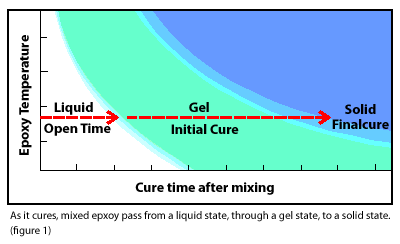
Epoxy resin goes through three different phases from the liquid into the solid. In the liquid phase and a few seconds after blending the epoxy and the hardener, the temperature suddenly increases to a level in which a great amount of heat is released resulted by the intermolecular bonds inside the resin. Immediately after the heat release, the gel phase is initialized and formed.
Steps in applying epoxy on the stone surface
It is vital that before initializing the gel phase, the epoxy resin should be applied on the surface of the stone by means of special applicators by hand because the liquid phase is the only phase of epoxy during which the epoxy resin has the needed plasticity in order to be easily spread along the surface of the stone (pot life). By acquiring the gelling phase, each Slab is placed in the curing oven in order to go through the gelling time and experience the solid phase under the 50 Celsius degrees. This is when the epoxy resin is treated and achieves the ultimate maximum of mechanical strength in the solid phase. The time that each Slab is separately retained in the curing oven ranges from 6 to 12 hours depending on the environmental conditions. It should be noted that the epoxy resin needs approximately 7 full days in order to reach the ultimate strength in the solid phase which is called the curing time.
The correlation between epoxy resin and the type of the stone
Any type of epoxy resin suits a specific type of stone . For instance, in Granite as a hard and highly resistant natural stone, it is necessary to use the epoxy resins with high ability to permeate into the fabric of the stone. This is because the stone is more compact with higher density. Moreover, each type of epoxy needs a special type of hardener in order to achieve the ultimate mechanical strength depending on the weather conditions, the environment, the temperature on the surface of the stone and so on.

Noavaran Sang Arya The product of a beautiful mind A unique collection of natural stones The first professional stone company in QC