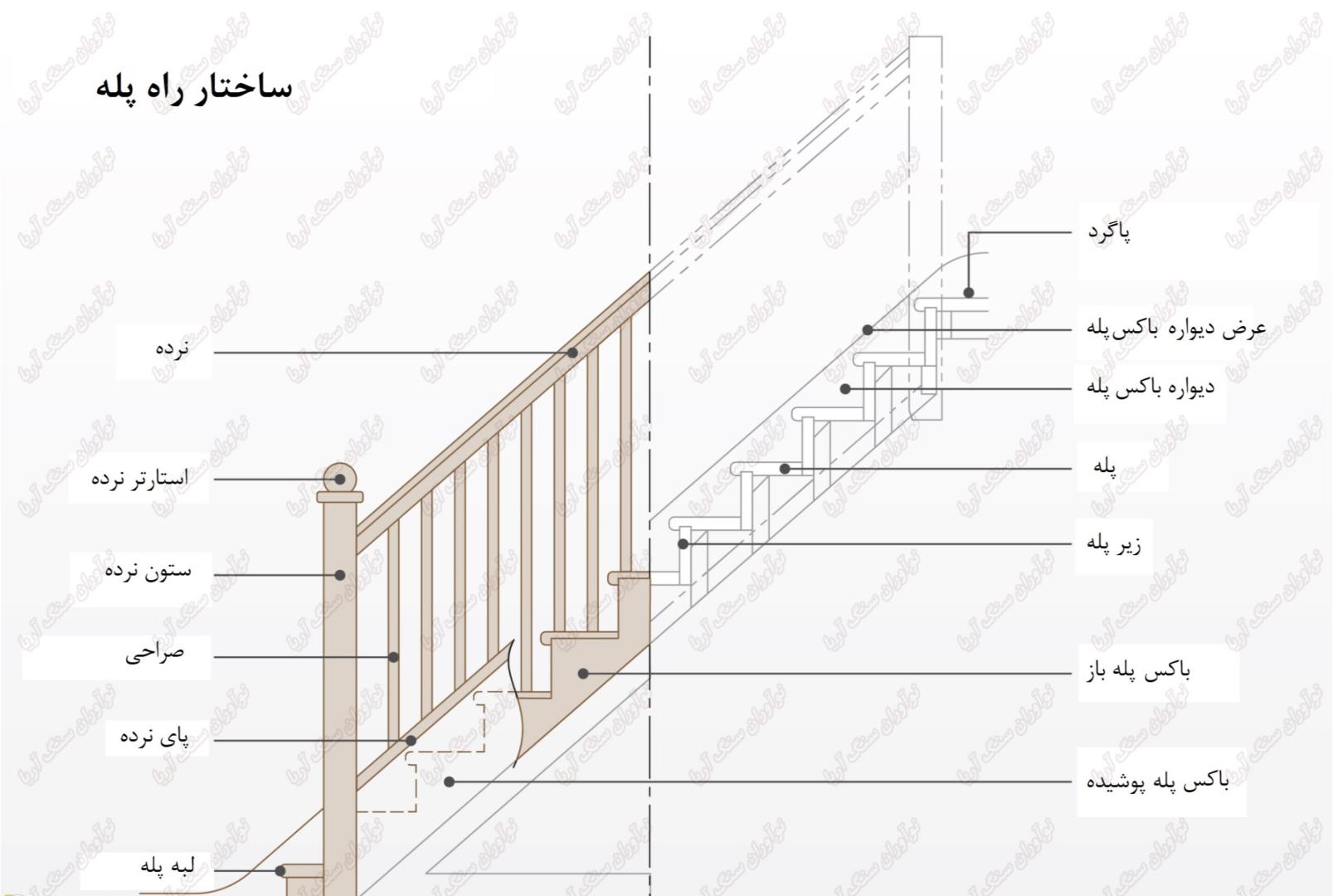


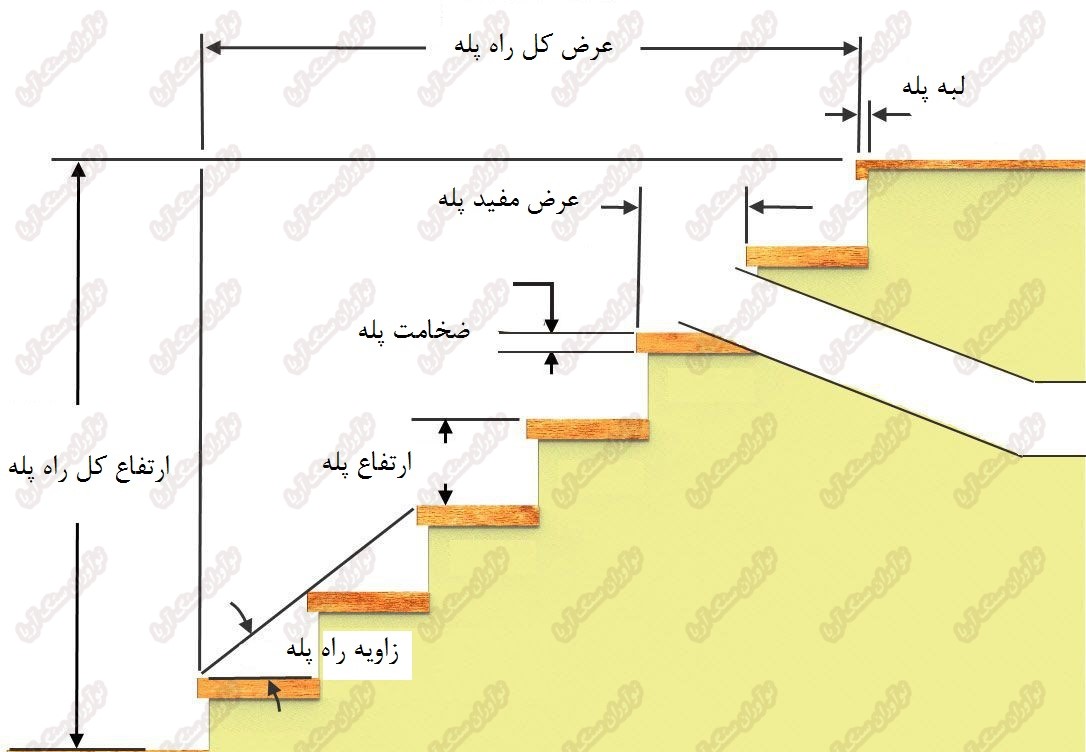
Tread and rise follow a set of known international codes as well as demostic ones defined by the Civil Engineering Association in order that the safety is ensured specially about the elderly and the children. This is why the staircase designer is obliged to uphold the engineering standards with respect to the staircases.
The stair width is the distance between on end of the tread to the other excluding the handrails. This measurment should not be less than 92 cm. Subject to one-side handrail, the stair width should not be less than 80 cm and not less than 69 cm in two-sides handrails. It should be mentioned that the measurements are under the conditions of common stairs. In case of spiral staircases, the tread radius should be from 53.5 cm and a walking path of 43 cm to 91.5 cm with a walking path of 81 cm.
In order to ensure the safety, the staircase should be broken up into a set of reasonable intervals so that the users could take some rest along the stairs and to avoid the negative effects of the continuous stairs. That is why the rise is one of the most important factors in designing the staircases. To clarify, it is recommended to place a landing in the staircases for every 366 cm of the vertical rise.
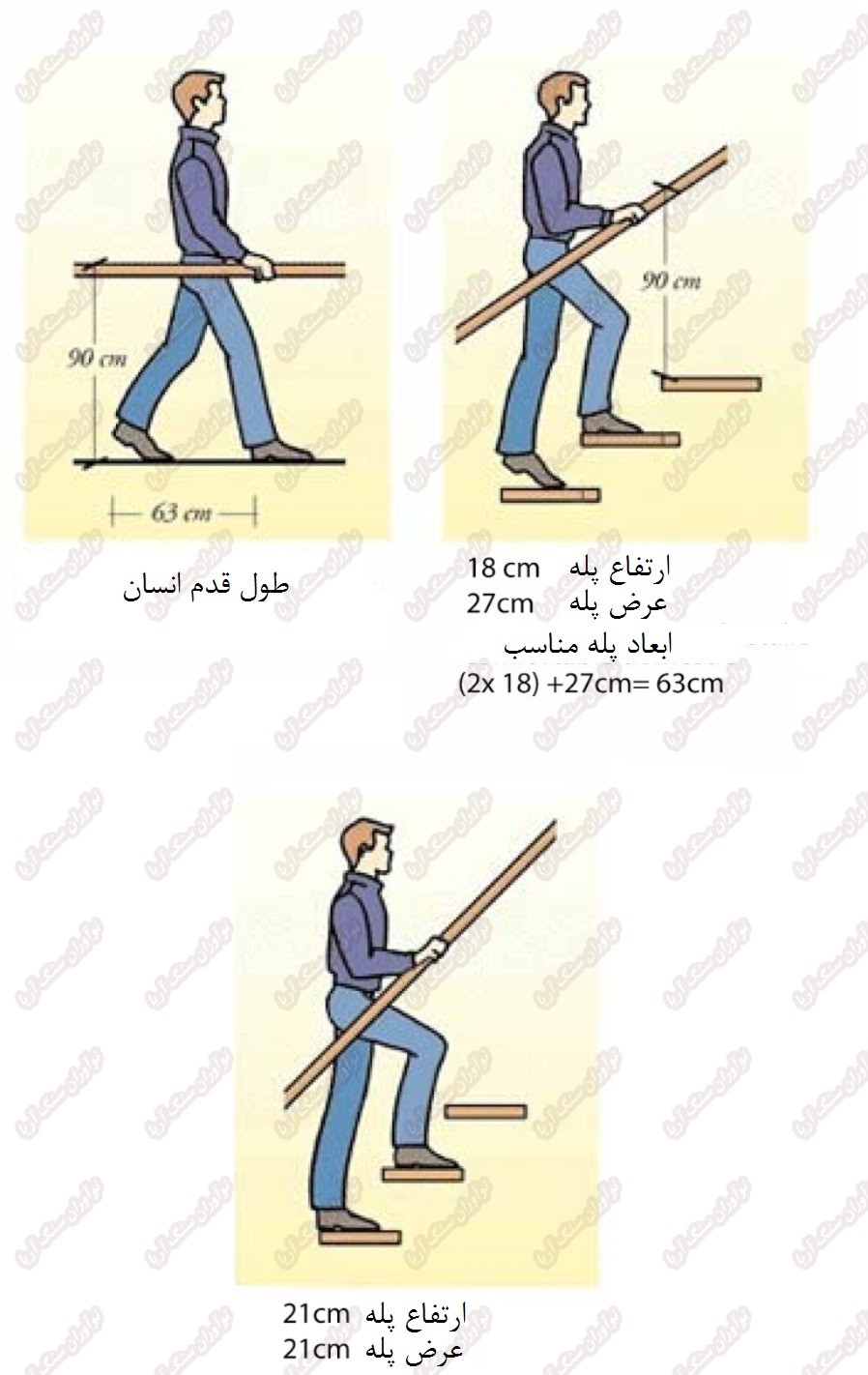
It is vital for the designers to keep the minimum tread width as well as the maximum tread rise constant along the whole of the staircase so as to keep the user's rhythm steady while going up and down the stairs. Accordingly and based on the engineering codes, the tread run should not be less than 28 cm. Additionally, it is vital to design the height of tread rise less than 18 cm and more than 10 cm.
As a rule of thumb, the sum of the tread rise and two times of tread run should be equal to 63 cm, just the same as the human pace length.

Noavaran Sang Arya The product of a beautiful mind A unique collection of natural stones The first professional stone company in QC